

ABOUT THE DIRECTOR:
To its already formidable array of medical and scientific talents, the Center has recruited an internationally recognized expert in valvular heart disease, Dr. Blase Carabello. An author of the American Heart Association / American College of Cardiology Guidelines for the Treatment of Valvular Disease, past president of the Society for Heart Valve Disease, vice president of the Heart Valve Society of America, and author of more than 300 publications on the subject, he brings his special talents in this field to THI. His goal is to ensure that the full scope of THI excellence is brought to bear on every patient with VHD, ensuring that each patient is treated by what's best for that patient for that moment and for the future.

ABOUT THE CO-DIRECTOR:
We are also privileged to have Dr. R. David Fish, a highly respected interventional cardiologist and leader at THI, as co-director of the Center. Dr. Fish is director of Interventional Cardiology Research and Education at THI with special interests in interventional cardiology, coronary and peripheral vascular stents, cardiac electrophysiology, and pacemakers.
Mission
For many years valvular heart disease (VHD) has been relegated to the back burner of cardiac diseases while heart attacks, heart failure and arrhythmia held center stage. However, in the past decade, interest in VHD has increased several fold, spurred by a rising incidence of the diseases fueled by an aging US population (VHD increases with age) and by exciting new therapies for VHD. The Texas Heart Institute at St. Luke's Episcopal Hospital is strategically positioned to become one of, and perhaps
the most prominent center for the treatment of VHD in the US.
The new Center for Heart Valve Disease focuses on all aspects of valvular heart disease, including improved replacement procedures with less invasive technology and the use of adult stem cell therapy.

Understanding Heart Valve Disease
Valvular heart disease is often seen as an affliction of the elderly and experts anticipate that as the general population ages, including millions of Baby Boomers, and people are living longer, the prevalence and costs of treating these afflictions will significantly rise. The disease, however, can afflict people at any age, and is sometimes congenital.
In addition, researchers worry that the disease often goes undiagnosed and that incidence rates might even be higher than reported. A study recently presented to the American Heart Association looked at patients in New York State and found that the incidences of hospitalization and treatment for heart valve disease have "progressively and constantly risen since the early 1980s," increasing at a rate of almost 10% per year.
VHD is a group of mechanical diseases that impose an overload on the heart that eventually destroys it. These mechanical problems have only a mechanical solution—correction of the lesion by valve repair or replacement.
Such correction has traditionally occurred in the operating room (OR), but new percutaneous (through the skin without surgery) approaches make correction feasible in the catheterization laboratory or in a hybrid OR for some patients. Percutaneous therapy has terrific appeal to patients who can benefit from it without the need for surgery. However, surgery is a proven commodity that produces extraordinary success. Weighing the best therapy for each patient will be a challenge for decades to come.
See the related topics on this website in the Heart Information Center:
Remarkably little is known about why the patient with VHD gets into trouble. What is it about the overload that causes the heart to fail? Such knowledge could lead to better timing of intervention before any adverse affects develop and could potentially lead to new therapeutic targets.
Related news and publications
March 27, 2012
Houston VA Doctor Receives Prestigious Award
The editors of the Journal of the American College of Cardiology (JACC) honored Blase A. Carabello, MD, FACC, with the Simon Dack Award for Outstanding Scholarship. See Accolades for more detail.
January 13, 2012
Blase A. Carabello, MD, Appointed Chief of Cardiology
Dr. Blase Carabello has been appointed Chief of Cardiology for both the Texas Heart Institute and St. Luke's Episcopal Hospital. Read the full news release from St. Luke's.
September 15, 2011 

Artificial Heart Valve Undergoes Testing
Two great-grandmothers (Anna Jean Irwin, left, and Ana Riddel) share more than a first name after both underwent a unique procedure at THI to correct a life-threatening heart valve condition, severe aortic stenosis. Cardiologists Biswajit Kar, MD and Pranav Loyalka, MD, and cardiovascular surgeon Joseph Coselli, MD, implanted an artificial heart valve in each woman using a non-surgical technique. Read the full story in the Texas Medical Center News.
April 2, 2011
Heart doctors praise new valve procedure
"Houston doctors have begun replacing worn-out heart valves without cracking open the patient's chest, an experimental procedure that could open treatment to roughly 100,000 Americans a year now considered too frail to have surgery." Dr. Biswajit Kar, THI cardiologist, discusses the benefits of the procedure and Dr. Blase Carabello, recently named director of THI's Center for Heart Valve Disease, calls it a "huge advance." Read the full article in the Houston Chronicle.
March 9, 2011 
Dr. Blase A. Carabello to Head Center for Heart Valve Disease
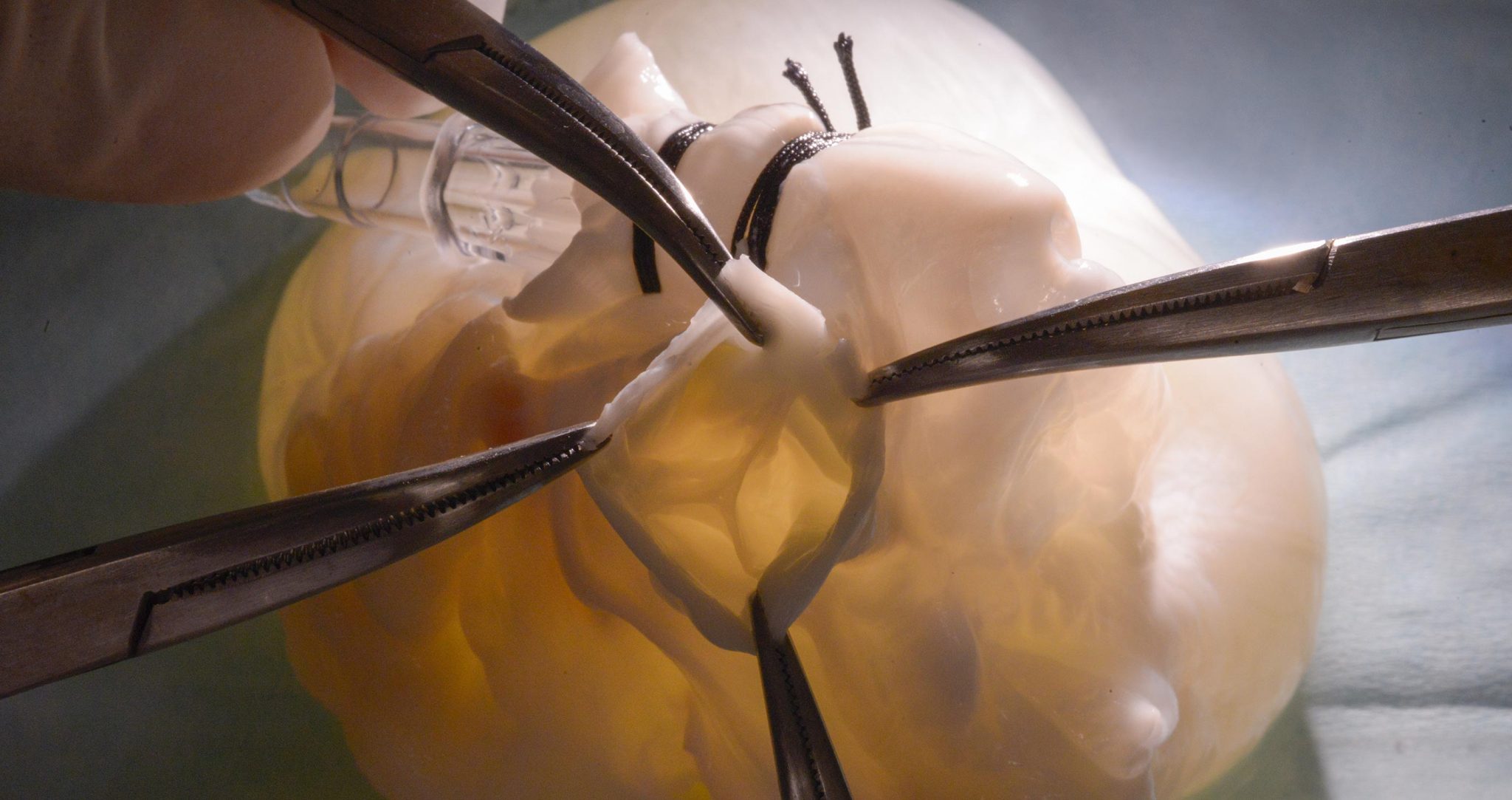
THI appoints Dr. Blase A. Carabello as director of its new Center for Heart Valve Disease.
Contact Information and Location
The Center is located on the 5th floor of the Texas Heart Institute at St. Luke's Episcopal Hospital—the Denton A. Cooley Building. Offices are in the Library and Learning Resource Center suite. Click here for detailed directions including maps.
Street Address
6770 Bertner
Room C520
Houston, TX 77030
Mailing Address
MC 3-273
PO Box 20345
Houston, TX 77225-0345
FIND A DOCTOR or call 832-355-DOCS (3627)